JNI Advocates Religious Harmony at North Central Security Summit
The recurring violence in Plateau State has often been explained through the familiar lenses of religion, ethnicity, land disputes and political competition. While these factors undoubtedly contribute to the conflict, they do not fully explain why mistrust has endured for decades. Beneath the bloodshed lies a more fundamental question—one that extends far beyond Plateau State itself: who truly belongs? For generations, the indigene-settler dichotomy has shaped access to political office, employment, education, scholarships and other public opportunities in many parts of Nigeria. It has created categories of citizens who, despite being born, raised and contributing to a community for decades, are still regarded as outsiders. Plateau State has become one of the most visible theatres of this national contradiction. Yet it would be both unfair and inaccurate to pretend that Plateau alone bears responsibility for the problem.
The Jama’atu Nasril Islam (JNI) has called for stronger religious harmony, tolerance and peaceful coexistence between Muslims and Christians as a fundamental requirement for achieving lasting peace and security in the North Central region.The call was made during JNI’s participation in the North Central Zonal Security Summit 2026 , held on Monday, 31 August 2026, at the New Banquet Hall, Benue State Government House, Makurdi, under the theme: “Collaborative Approaches to Strengthening Security and Regional Stability.”
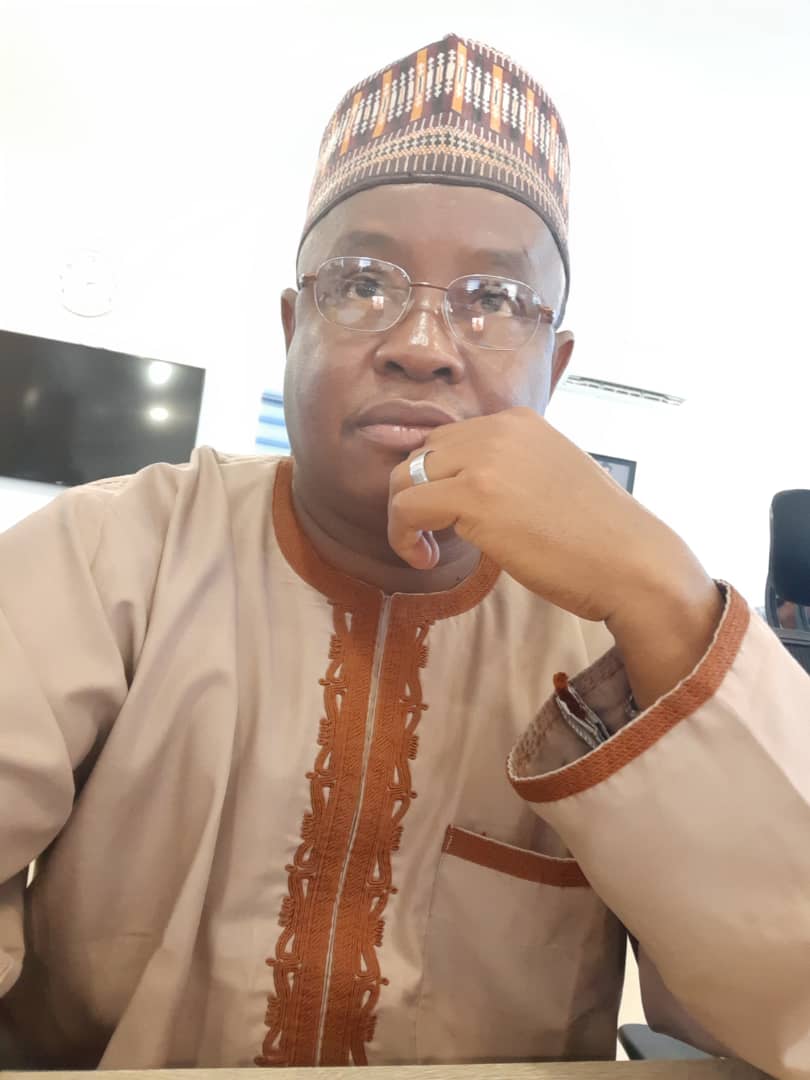
The JNI was ably represented at the summit by the Plateau State Secretary, Dr. Salim Umar, who participated in the deliberations on the region’s security challenges and the need for stronger collaboration among critical stakeholders.The summit, convened by the Federal Ministry of Defence in collaboration with the Office of the Senior Special Assistant to the President on Community Engagement (North Central), brought together government officials, security and intelligence chiefs, traditional rulers, religious leaders, civil society organisations, youth representatives and other stakeholders.
From the JNI perspective, the broad participation was important because the security challenges confronting the region including banditry, kidnapping, farmer-herder conflicts, communal violence, organised crime, illegal mining and violent extremism, cannot be effectively addressed by security agencies alone. They require genuine cooperation among government institutions, security agencies, traditional authorities, religious organisations and local communities.
Religious Harmony as a Security Imperative
JNI stressed that Muslims and Christians have lived together for generations across the North Central and must continue to see one another as partners in peace and development rather than adversaries.
Religious differences should never be exploited by criminals, extremists or political interests to create suspicion and division. Islam and Christianity may differ in their doctrines, but both encourage values such as peace, compassion, justice, morality and respect for human dignity.
JNI therefore urged Muslim and Christian leaders to strengthen interfaith dialogue and community-level engagement, particularly in areas where tensions are emerging.
Religious leaders should also use their platforms to discourage hate speech, inflammatory preaching, misinformation and the circulation of unverified claims capable of provoking conflict.
Collective Responsibility for Peace .
JNI welcomed the summit’s emphasis on intelligence sharing, early warning, community security, civil-military relations and social cohesion.
Religious institutions, it noted, are deeply connected to communities and can contribute significantly to the early identification of tensions and peaceful conflict resolution.
At the same time, JNI emphasised that criminal acts must be treated as criminal acts, regardless of the religion or ethnicity of those involved. No entire religious or ethnic community should be collectively blamed for the actions of individuals.
The organisation called for justice based on credible evidence, fairness and the rule of law, as these remain essential to building public confidence and strengthening cooperation between communities and security agencies.
A Shared Future
JNI further emphasised that religious tolerance does not require Muslims or Christians to compromise their faith. Rather, it means respecting the right of every citizen to practise his or her religion freely and peacefully.
The North Central needs a security strategy that recognises the interconnectedness of its communities.
Peace in one state contributes to stability in neighbouring states, just as insecurity in one area can easily spread across boundaries.
JNI therefore called on all stakeholders to ensure that the resolutions of the summit translate into practical and sustained action.
The organisation reaffirmed its commitment to working with government, security agencies, traditional institutions, Christian bodies and communities to promote peace, religious harmony, mutual respect and social cohesion throughout the North Central.
For JNI, Muslims and Christians may worship differently, but they share one region, one society and a common interest in peace. Our religious differences should never make us enemies; rather, our shared commitment to peace should make us partners.
11th September, 2026 at a meeting with Muslim leaders in Jos.
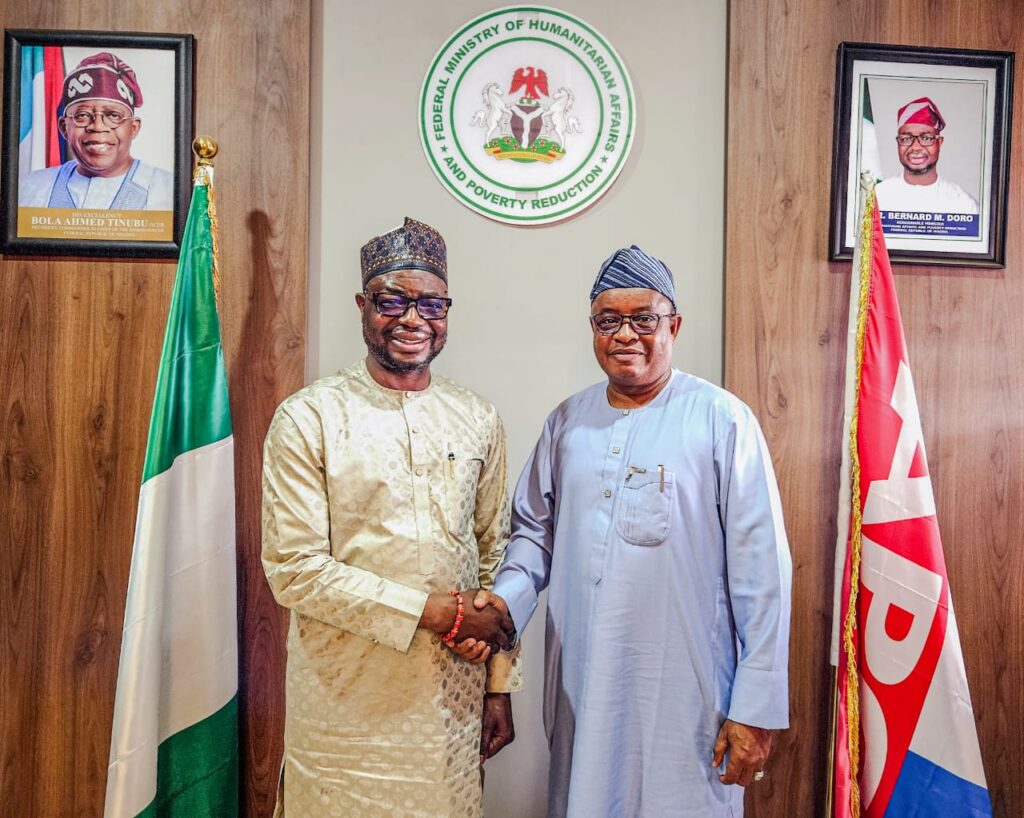
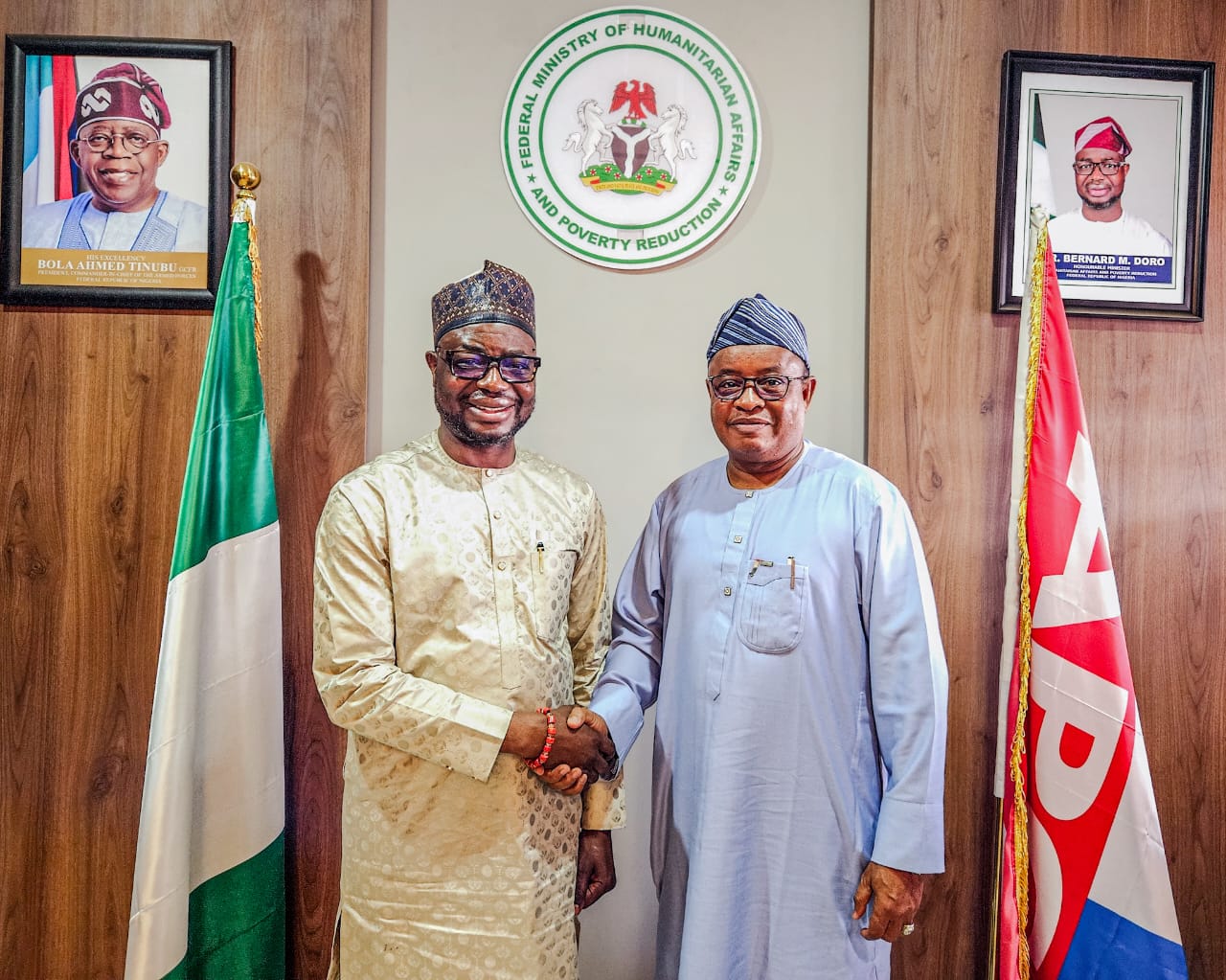
Advocacy visit to the minister for humanitarian affairs in Abuja by the Chairman of fhipd.
Dr. Bernard Doro is the name of the minister